
Most businesses today are focused on one primary goal — generating more leads. The logic seems straightforward: more leads should result in more sales. However, many companies investing in lead generation services in Mumbai often experience a different reality. Despite a high volume of inquiries, conversions remain low and revenue growth stays stagnant.
This disconnect happens because businesses are chasing lead quantity instead of focusing on lead quality. To truly drive revenue, companies need to shift their focus from simple lead generation to building qualified demand.
Lead generation is the process of attracting potential customers through channels such as digital ads, landing pages, email campaigns, and lead generation cold calling in Mumbai. A lead generation agency in Mumbai can help businesses generate a steady flow of inquiries, creating what appears to be a strong sales pipeline.
However, not every lead represents a real business opportunity. Many prospects may be casually exploring, comparing options, or may not even have the authority or budget to make a purchase decision.

Businesses relying heavily on traditional lead generation often face the following issues:
Qualified demand refers to attracting prospects who already have a clear need, intent, and readiness to buy. These are not just leads — they are potential customers who are actively looking for a solution and are closer to making a decision.
Instead of focusing on volume, qualified demand focuses on relevance and intent, making it far more effective in driving revenue.
A qualified prospect typically has:
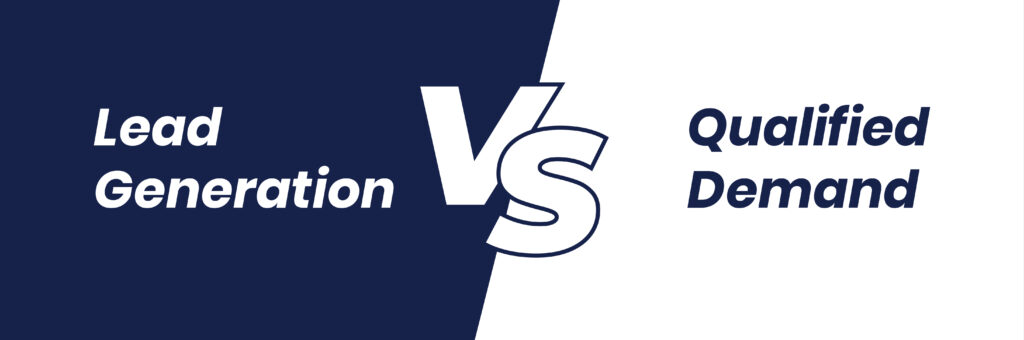
The difference between lead generation and qualified demand has a direct impact on business performance.
Lead generation focuses on filling the pipeline with as many leads as possible, often resulting in lower efficiency. Qualified demand, on the other hand, ensures that the pipeline is filled with high-quality opportunities that are more likely to convert.
This shift from quantity to quality leads to:
Cold calling continues to be a powerful tool when used strategically. However, random outreach without proper targeting often leads to wasted effort.
In the context of lead generation cold calling in Mumbai, success depends on how well the data is qualified before outreach begins.
When done right, cold calling shifts from being a volume-based activity to a focused, result-driven approach.
Today, businesses expect more than just lead volume. A modern lead generation agency in Mumbai must focus on delivering high-quality, sales-ready opportunities rather than just raw data.
This involves:
The goal is no longer to generate more leads, but to generate the right leads.
One of the biggest mistakes companies make is measuring success based on metrics like number of leads or cost per lead. While these metrics are important, they do not directly reflect revenue impact.
By focusing on these metrics, businesses can align their strategies with actual revenue outcomes rather than just activity levels.
Lead generation may help fill your pipeline, but it does not guarantee revenue. Qualified demand, on the other hand, ensures that your pipeline is filled with prospects who are more likely to convert.
Businesses that shift their focus from generating more leads to generating better opportunities are the ones that achieve sustainable growth. Whether you are working with a lead generation agency in Mumbai or investing in lead generation services in Mumbai, the real question to ask is:
Are you generating leads, or are you generating revenue opportunities?
Let us help you with Lead Generation. Reach out to us at lead@krono.co.in or call 91335 66355 today.
302/303/304, Kaliandas Udyog Bhavan, Sadanand Hasu Tandel Marg, Century Bazaar, Prabhadevi, Mumbai, Maharashtra 400025.
Contact No : +91 91335 66355
Email : lead@krono.co.in
All rights reserved by Krono IInc